Introduction and Definition of the Commercial Invoice
The commercial invoice is considered a fundamental document in international trade and shipping, as it plays a pivotal role in facilitating customs procedures and avoiding delays or legal issues with customs authorities. This invoice is used in operations التصدير واfor importIt also sometimes contributes to foreign exchange transactions. It is important for the invoice to be accurate and comprehensive to ensure smooth cross-border transactions.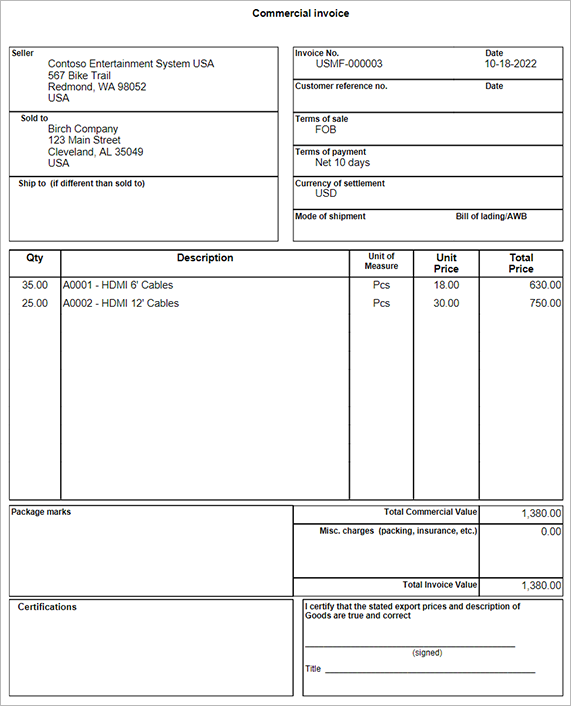
What is a commercial invoice?
The commercial invoice is an official document used in international shipments, typically issued by the seller (exporter) to the buyer (importer) after the goods have been shipped. This document serves as a formal request for payment for the shipped goods and contains detailed information that contributes to the customs clearance process. Customs clearance.
The commercial invoice differs from regular invoices; it must meet specific legal requirements. These requirements include additional information such as the country of origin, the total value of the goods, shipping terms, as well as a detailed description of the products. This information helps customs authorities determine the amount of taxes and import duties owed.
Unlike the bill of lading, the commercial invoice does not indicate ownership of the goods nor does it confer ownership rights. However, it is essential for facilitating customs procedures, as it is used to determine the applicable duties and taxes.
In general, a commercial invoice is a legally binding document issued after the completion of a sale, and it significantly contributes to facilitating international trade. It is also known as a tax invoice or electronic invoice, reflecting the importance of accuracy and comprehensiveness in handling commercial transactions.
Commercial Invoice: Purpose and Importance
The commercial invoice is considered a vital tool in shipping operations, as it helps ensure the accurate declaration of goods. Preparing an accurate and comprehensive invoice enhances the efficiency of shipments passing through customs, making the customs clearance process easier.
Any error or omission in the invoice details may lead to the imposition of unjustified fees by customs authorities, which could result in delays that complicate the business process.
The commercial invoice also serves a number of vital purposes:
- Documentation of the Commercial Transaction
The invoice serves as a documented proof of the completion of the transaction between the buyer and the seller, providing a comprehensive description of the shipped goods. - Determination of Fees and Taxes
The invoice is used as a basis for estimating the customs value of imported goods, which helps customs officials accurately calculate the applicable fees and taxes based on the prices paid. - Recording Sale Details
The invoice contains accurate information about the transaction, such as the names and addresses of the parties involved, and a description of the goods sold. This documentation helps in resolving any disputes that may arise regarding the value of the transaction. - Verification of Shipment Contents
The invoice provides a detailed description of the goods, including quality, quantity, and price, which helps importers ensure that the shipment matches the purchase order and packing list. - Facilitating Customs Clearance
The invoice provides detailed information necessary for export and customs clearance, making the international shipping process easier. - Accounting and auditing purposes
The commercial invoice is important for providing an official record of the transaction, which contributes to the preparation of financial reports and compliance with accounting standards. - Payment Request
The invoice serves as an official document requesting the buyer to pay the amount due after the delivery of goods.
These points highlight the importance of the commercial invoice and its central role in enhancing the efficiency of international shipping and regulating global trade.
Types of Commercial Invoices
Commercial invoices vary to meet different needs, and among the most prominent types are:
- The unified commercial invoice:
A printed invoice used for all customers registered in the establishment's database. It is issued for customers who do not frequently interact with the company, allowing for the maintenance of an organized record without the need to include their data. - The recurring invoice automatically:
Is issued periodically according to a specific schedule, making it easier to manage subscriptions in clubs and associations. It can be printed daily, weekly, or monthly. - Monthly account invoices:
A record that includes all transactions presented to the client during a specific month. Receipts can be converted into invoices at the end of the month, with the option to defer invoices below a certain amount to the following month. - Pro forma invoices:
They are used to clear goods in commercial or customs authorities. They are similar to original invoices but are handwritten and sent to a limited number of clients. - Price quotation invoices:
They are provided in response to inquiries about goods and include details of prices and payment terms. - Original invoices:
They are an official document that proves the delivery of goods and requests the buyer to pay immediately upon receipt, or according to an agreed-upon date. They include all details of the goods, prices, and payment terms.
Terms of the Commercial Invoice
To ensure the validity of the commercial invoice, several essential conditions must be considered:
- Tax registration: The tax file number of the institution issuing the invoice must be registered, along with the tax registration number.
- Product details: The name of the item, the price for each item, and the quantity must be included.
- Totals: Total sales must be calculated, and all items should be recorded with the total amount.
- Number sequence: The invoice number must be unique and sequential.
- The date: The invoice must be issued on the date it was created.
- Institution Name: The official name of the institution or the name of the producing institution must be written.
- Taxes: Sales tax and any other required taxes must be included in the invoice.
- Documentation: The invoice is recorded in the company's books to ensure that transactions are documented correctly.
Components of the Commercial Invoice and the Best Template for It
The commercial invoice is a key element in business transactions, as it must include accurate information to ensure its validity and effectiveness. Below are the essential components that should be included in the commercial invoice, along with best practices for selecting an appropriate template.
Essential elements of a commercial invoice
- Information of the concerned parties:
- Seller details: Company name, full address, telephone number, city, postal code, and country should be listed.
- Buyer details: must include the full company name, address, city, zip code, and country.
- Invoice Number and Date:
- The invoice must carry a unique and sequential number, making it easier to track transactions..
- It is essential to clarify the invoice issuance date and the payment due date to avoid any misunderstandings.
- Shipment details:
- The invoice must include a comprehensive list of goods that includes:
- Item code
- Brief description of the products
- Quantity and Units of Measurement
- Gross weight and net weight
- Unit price and total amount
- Country of origin
- The invoice must include a comprehensive list of goods that includes:
- Harmonized System (HS) Code:
- This code, which consists of 6 digits, must be included to facilitate customs procedures and product classification..
- Payment Terms:
- The duration within which the buyer must pay the amount should be specified, such as "net-30" or "net-45.".
- International trade terms (Incoterms) should also be defined to clarify responsibilities and costs.
- Transaction details:
- The invoice should include information such as the order number, total sale amount, currency, and payment instructions..
Choosing the Best Template for Commercial Invoices
There is no specific format for commercial invoices, but you can find a variety of templates online. When choosing a template, make sure it includes the elements mentioned earlier.
The form may include:
- Quick Response Code (QR)
- Digital signature
- Universally Unique Identifier (UUID)
These elements ensure compliance with legal requirements, as is the case with the regulations of the Zakat and Income Authority in the Kingdom of Saudi Arabia.
Risks of not filling out the commercial invoice accurately
Filling out the commercial invoice accurately is vital to avoid many risks. Failure to comply may lead to long delays in operations. Shippingwhich negatively affects delivery schedules and increases costs. In addition, the invoice is used for customs clearance purposes, and any error or misrepresentation in the information can result in the incorrect payment of due fees and taxes, opening the door to legal consequences.
Furthermore, correcting errors requires additional resources, which increases administrative costs. Therefore, it is essential to ensure the accuracy of the information entered in the commercial invoice to avoid these risks and ensure the smooth operation of business processes.
The difference between the commercial invoice, the bill of lading, the tax invoice, and the pro forma invoice
The differences between the commercial invoice and the bill of lading appear andProforma Invoice The tax invoice in terms of purpose, use, and details, which helps to understand each document and its role in business operations.
| the element | Commercial Invoice | Bill of Lading | tax invoice | Proforma Invoice |
|---|---|---|---|---|
| Purpose | Clarification of the details required for the customs declaration upon import | A legal document that specifies the terms of shipping goods and serves as proof of their receipt | Official document issued by suppliers in the Goods and Services Tax (GST) system | It represents a preliminary agreement between the buyer and the seller |
| its use | Used in international trade for customs purposes | It is used to confirm the carrier's responsibility for transporting the goods | It is mainly used in local transactions or when selling services | Used to estimate the cost of the final invoice and the expected delivery date |
| the details | Contains information about goods such as quantities and prices | Shipping terms include the destination and mode of transport | It includes details of the sales tax and supplier registration numbers | It provides an estimate of the expected amounts and the rights and obligations of both parties |
the conclusion
The commercial invoice is considered a fundamental element in business operations, playing a pivotal role in documenting transactions and facilitating customs procedures. Preparing an accurate and comprehensive invoice significantly contributes to ensuring the smoothness of shipping and clearance processes, and enhances the company's credibility with its customers and business partners.
By understanding the components of a commercial invoice and the importance of filling it out accurately, companies can avoid potential risks that may arise from errors, such as legal delays and additional costs. In the modern business world, commitment to accuracy in preparing commercial invoices is an essential necessity to ensure the success of business operations and to enhance trust in business relationships.
Therefore, it is important for every organization to prioritize billing accuracy and invest in the systems and processes that ensure it, contributing to the efficient and effective achievement of its business goals.