Starting the export or import process requires obtaining the approval of both parties involved (the buyer and the seller). This agreement takes the form of a sales contract aimed at distributing expenses and risks between the two parties. The drafting of this contract is extremely important, as it helps facilitate trade and exchange and avoid disputes. The international sales contract is subject to a set of rules designed to unify and simplify international trade.
The agreement aims, in addition to providing a unified and flexible legal framework for international sales contracts, to offer a neutral and independent international regulatory mechanism for addressing disputes related to the sale of goods at the international level.
In its pursuit of achieving an advanced economic system and its desire to keep pace with global standards, the Kingdom of Saudi Arabia has joined the United Nations Convention on Contracts for the International Sale of Goods, pursuant to Cabinet Resolution No. 839 dated 02/12/1444 AH. This accession enhances the Kingdom's competitive capacity and contributes to the growth of the commercial sector, especially regarding cross-border transactions - whether that is Export or Import
For small and medium enterprises In this article, we will review all aspects related to the Convention on Contracts for the International Sale of Goods.
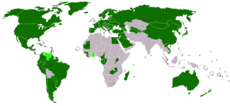
What is the United Nations Convention on Contracts for the International Sale of Goods and when does it apply?
Vienna Convention on Contracts for the International Sale of Goods (CISG) It is an international agreement aimed at unifying and organizing the rules related to contracts for the sale of goods between different countries. The agreement was adopted in Vienna in 1980 under the auspices of the United Nations.
The importance of the agreement: The significance of this agreement lies in its provision of a unified legal framework for resolving disputes and facilitating cross-border sales, making it a key tool in international trade.
Contracting States: So far, 97 countries have adopted the Vienna Convention, reflecting its significant impact on regulating international trade.
When does this agreement apply? According to Article 1(1) of the agreement, this agreement applies to contracts for the sale of goods between parties whose places of business are in different countries, in the following two cases:
- When countries are contracting states.
- When the rules of private international law lead to the application of the law of a contracting state.
The Importance of the Vienna Convention on International Sales of Goods (CISG):
- The Fundamental Pillar of International Trade
The sales contract is the foundation of international trade in all countries, regardless of the legal system or level of economic development. Therefore, the Vienna Convention is considered one of the fundamental agreements in international trade law. - Balance between the interests of the buyer and the seller
The agreement provides a precise balance between the rights and obligations of both the buyer and the seller, helping to avoid disputes and facilitate trade. - A Unified Legal Framework
The agreement provides modern and uniform legislation regarding international sales of goods, thereby avoiding the need to use private international law rules to determine the applicable laws for contracts. - Achieving Certainty in Contracts
The application of the convention leads to increased certainty in international sales contracts, thereby enhancing the predictability of the application of the same legal rules from one country to another. - Flexibility in the Application of the Agreement
The agreement may apply even if the parties' place of business is in non-contracting states, when the rules of private international law refer to the application of the law of a contracting state or when the agreement is chosen by the parties. - Benefits for Small and Medium Enterprises
Many small and medium-sized enterprises may face difficulties in obtaining legal advice when negotiating international contracts. This is where the importance of the agreement comes in as a neutral and unified legal framework that protects these enterprises and maintains the balance of contracts. - Support for Cross-Border Trade Expansion
The agreement contributes to facilitating cross-border trade expansion by reducing legal risks and improving transparency in commercial transactions between countries. - Supporting Trade in Developing Countries
Since business institutions in developing countries are often legally weaker, the implementation of the agreement provides them with legal protection and helps ensure balance in contracts.
The meaning of an international sales contract in the United Nations Convention on Contracts for the International Sale of Goods:
To properly execute the contract, both parties must fully agree. This agreement depends on determining the offer price, the general terms of sale, as well as the acceptance of the offer by the other party.
1. The offer or price quotation:
The commercial offer is the basis of the sales contract and must be clear and precise, with a price specified in a language that the customer understands. The pro forma invoice serves as a table of prices and specifications related to the offer and helps to define the legal relationship between the seller and the buyer.
Withdrawal of the offer in international sales contracts for goods
The offer directed to an unspecified person is considered an invitation to negotiate, unless the sender has clearly indicated that it is a binding offer. According to Article 15 of the United Nations Convention on Contracts for the International Sale of Goods, the offer can be withdrawn before it arrives or upon its arrival, even if it is irrevocable.
The offer cannot be revoked if a period for acceptance has been specified or if it is reasonable for the offeree to believe that the offer cannot be withdrawn. The offer also lapses if it is rejected by the offeree before it reaches the offeror, according to Article Seventeen.
2. General Terms of Sale:
The general terms define the legal framework for corporate relationships, including the determination of price, payment terms, delivery, and dispute resolution. These terms must be clearly written in a language that the buyer understands before signing the contract, as they are considered legally invalid if not reviewed.
3. Acceptance:
The buyer's acceptance of the offer is considered a legal agreement that forms the contract. The acceptance must be in writing (invoice or contract) to ensure proof in the event of a legal dispute. It is advisable to avoid oral acceptance, as it is not considered strong legal evidence.
The eighteenth article of the United Nations Convention on Contracts for the International Sale of Goods states that acceptance is considered any statement or action made by the offeree that demonstrates their agreement to the offer.
The essential terms in an international sales contract
| the item | the details |
|---|---|
| Contract parties | Identifying the names of companies, their addresses, and the responsible representatives. |
| Nature of the contract | Identification of the product or service, along with a description of the technical specifications and quantity. |
| Price and Payment Methods | Determining the price in the agreed currency, and payment methods (in advance or upon delivery), along with specifying the Incoterms conditions. |
| Transportation methods | Determining the appropriate mode of transport according to the type of goods. |
| Delivery methods | Specify the date and place of delivery, along with the terms for late penalties if applicable. |
| force majeure | Reference to unforeseen circumstances that may affect the execution of the contract. |
| guarantees | Defining the guarantees between the parties, such as the guarantee for the seller to recover the advance. |
| jurisdiction | Determining the applicable law in the event of a legal dispute. |
| language | Determining the language that will be used for communication and executing the contract. |
Regulations for the termination or modification of the contract according to the United Nations Convention on Contracts for the International Sale of Goods:
- Material Breach (Article 25): A breach of contract is considered material if it causes harm to the other party that deprives them of their fundamental rights under the contract, unless the breaching party anticipated this outcome.
- Notice of Termination (Article 26): The termination of the contract shall have no legal effect unless it is done by means of an official notification to the other party.
- The delay in notification (Article 27): The delay or error in sending the notification or its non-receipt does not deprive the right to rely on it, unless the agreement states otherwise.
- Specific performance (Article 28): The court cannot issue a judgment for specific performance unless it is possible under local law.
- Contract Modification (Article 29): The contract may be modified or terminated by mutual consent, but if the contract requires a written modification, it cannot be changed in any other way.
Obligations of the seller and buyer under the International Sale of Goods Contracts Agreement:
the seller | Jupiter |
|---|---|
| Delivery of Goods and Documents (Article 30): The seller is obligated to deliver the goods and documents in accordance with the contract and transfer ownership of the goods as specified. | Payment of the price and receipt of goods (Article 53): The buyer is obligated to pay the price of the goods and receive them. |
| Place of delivery (Article 31): If transportation is part of the contract, delivery is made to the first carrier. If the goods are specified, they are delivered at the agreed location. | Payment at the specified location (Article 57): If there is no specific place for payment, it must be made at the seller's place of business or the place of delivery. |
| Shipping Notice (Article 32): The seller is obligated to send a shipping notice to the buyer and specify the included goods. | Payment of the price on the due date (Article 59): The buyer is obligated to pay the price on the date specified in the contract or in accordance with the provisions of the agreement. |
| Delivery Date (Article 33): The seller must deliver on the date or within the period specified in the contract. | |
| Compliance of Goods (Article 35): The seller must deliver goods that conform to the agreed quantity, quality, and packaging. | |
| Absence of Rights in Goods (Article 41): The seller must deliver goods free from any rights or claims of third parties. |
Penalties for the Seller and Buyer Violating the Contract:
Jupiter | the seller |
|---|---|
| Request for enforcement (Article 46): The buyer may request the enforcement of the seller's obligation, unless the defect is substantial. | Request for Payment or Delivery (Article 62): The seller may request the buyer to pay the price or take delivery of the goods if the buyer has not fulfilled their obligations. |
| Additional Period (Article 47): The buyer may set a reasonable additional period for the seller to fulfill their obligation. | Extension of Time Period (Article 63): The seller may grant the buyer a reasonable additional period to fulfill his obligations if he delays in meeting them. |
| Contract termination (Article 49): The contract may be terminated if the seller's breach is substantial or if delivery is not made within the specified time. | Contract termination (Article 64): The seller may terminate the contract if the buyer's breach is substantial, such as failure to pay the price or failure to receive the goods after an additional period has been set. |
| Price reduction (Article 50): The price may be reduced if the goods are not conforming. | Specification of Goods (Article 65): If the buyer delays in specifying the goods as stipulated in the contract, the seller has the right to determine them based on the buyer's needs. |
| Acceptance or Rejection (Article 52): The buyer may accept or reject the goods delivered early or in excess quantities. | Damages (Articles 74-77): The seller may claim damages related to losses resulting from the buyer's breach, such as the difference between the agreed price and the current price. |
| Compensation (Article 74): The buyer is entitled to compensation for losses and lost profits. | |
| Compensation after termination (Article 75): The buyer can obtain the difference between the contract price and the resale price. | |
| Market Price Compensation (Article 76): The buyer is entitled to compensation based on the current price at the time of termination. | |
| Mitigation of Loss (Article 77): The buyer must mitigate the loss that has occurred to them. |
This table outlines the penalties that arise from violating the obligations of the seller and buyer according to the United Nations Convention on Contracts for the International Sale of Goods.
The conclusion
The United Nations Convention on Contracts for the International Sale of Goods provides an important legal framework for regulating commercial relationships between international parties, clearly defining the rights and obligations of each party. Through this convention, the protection of commercial interests is ensured, and procedures related to violations and penalties are organized, contributing to the achievement of justice and enhancing trust between the contracting parties.